Over the last few years, I’ve written several articles and created numerous videos on Biblical Covenants. This post brings them all together in one place!
There’s a story in the book of Joshua that I think people often read past without really understanding its importance. The Israelites had just crossed the Jordan, demolished Jericho, taken the city of Ai, and the surrounding Canaanite kings were scrambling in terror. The word had spread that this people and their God were not to be trifled with. Some of the local kings began forming military alliances to fight back, but one group recognized that military confrontation against YHWH was never going to work, so they made a craftier plan that took advantage of this new God’s own character. The Gibeonites sent a delegation to Joshua dressed in worn-out sandals and ragged clothes, carrying patched wineskins and dry, crumbly bread, as if they had been on the road for months. They claimed to have come from a distant country where they heard about the great power and name of Israel’s God, and they wanted to make a covenant of peace with Israel.
It worked. Joshua and the leaders of Israel looked at the moldy bread and the cracked sandals and accepted the evidence at face value. They made a formal covenant of peace with the Gibeonites and only three days later discovered that they were actually neighbors and not some distant nation. They were Canaanites, part of the very people Israel had been commanded not to make agreements with (Exodus 23:32-33).
Joshua 9:14 explains how this happened: “The men of Israel sampled their provisions but did not inquire of YHWH”.
They heard the appeal, tasted the stale bread, looked at the worn sandals, but they did not ask God for discernment of what might lie beneath the surface.
What Is a Covenant, and Why Does It Matter?
Before we get too far into the application, it’s worth understanding what a covenant actually is. We’ve largely lost the concept in modern Western culture. A covenant isn’t simply a contract, at least not the way we usually think of that word. It isn’t a handshake deal or a signed agreement you can terminate under the right conditions and with the right legal team.
A covenant is a formal, binding declaration of relationship sealed by blood. In the ancient world, when two parties entered a covenant, animals were slaughtered and divided. Often (not always) the parties walking between the pieces as if to say, “May what happened to these animals happen to me if I break this agreement”. The covenant created a bond deeper than preference, deeper than convenience. There is no way to end a blood covenant short of death.
When a covenant is made with a people–a tribe, a nation, a family line–even the death of the original parties doesn’t end it, because the covenant is inherited by their descendants. The commitment passes down through the generations. The only exit is death, and for a covenant involving a collective, that means the death of the last surviving member of that line.
This is exactly why, centuries after Joshua’s day, when King Saul slaughtered Gibeonites in violation of that original covenant, God allowed a famine to fall on Israel. When David asked God what brought this calamity, God pointed to Joshua’s covenant broken by Saul (2 Samuel 21). The covenant Joshua made with the Gibeonites on the basis of stale bread was still binding generations later, and the king’s decision to ignore it brought judgment on the whole nation.
Paul affirms this principle in the New Testament: “Even a man-made covenant, once ratified, cannot be set aside or added to” (Galatians 3:15). We see how serious God treated breaking a covenant made with the Gibeonites. How much more serious is a covenant made with God?
The Broader Principle: Extraordinary Bonds Demand Extraordinary Evidence
Most of us aren’t entering formal blood covenants with anyone, let alone neighboring city-states, but the principle illustrated in this story applies far beyond its original context. First impressions are not inherently deceitful–the Gibeonites went to extraordinary lengths to deceive Israel–but they are never sufficient grounds for binding yourself to someone in a high-stakes, long-term relationship.
The degree of scrutiny you apply to any relationship should be proportional to the impact that relationship will have on your life and the lives of those who depend on you.
Marriage is the most obvious and relevant case to most of us today. It is made in the pattern of a covenant: intended to be life-long, sealed by vows before God and witnesses, and inherited by the children born from the union. The family your children grow up in, the culture they’re formed by, the faith they’re raised in–all of this flows downstream from who you choose to marry. No amount of chemistry or shared interests substitutes for time, observation, and wisdom. Proverbs 6:1-5 gives sharp counsel to anyone who has made a hasty pledge: “If you have put up security for your neighbor… do this, my son, to free yourself… go, press your plea with your neighbor!” Even in ordinary financial matters, hasty commitments are worth escaping quickly if possible. How much more in marriage?
Business and real estate deals aren’t covenants–unless you’re sacrificing animals to seal the agreement, in which case you have bigger problems to address–but they are still serious. Contracts bind. Financial commitments have long tails. The partners you go into business with can shape the trajectory of your family’s financial future for years or even decades. Get legal counsel, study the histories of the people and organizations involved, and ask hard questions. Don’t be in such a hurry to get the deal done that you skip the due diligence.
Ministry partnerships often get the least scrutiny of all, and this is a mistake. Because ministry feels spiritual and well-intentioned, we sometimes treat discernment as unnecessary or even uncharitable. But who you co-labor with in ministry shapes your theology, your reputation, your relationships, and your influence. The wrong partnership can entangle you in false teaching, financial mismanagement, or moral compromise. It’s easy to create an associate, but it can be much more difficult and painful to disentangle yourself if necessary. This matters not just for you but for everyone who looks to you for leadership and example.
The Lesson: Your Due Diligence Matches Your Stakes
What should Joshua and Israel have done differently? The text tells us plainly. They should have inquired of YHWH. They should have prayed and asked for discernment.
That is the foundation: prayer, the seeking of God’s wisdom before making commitments of consequence. But that’s not the whole picture. Scripture never presents prayer as a substitute for wisdom; it presents it as part of the path to wisdom.
Deep familiarity with the Scriptures (especially Torah and Proverbs) equips you with principles that apply across every kind of relationship and agreement. It teaches you what to look for, what to avoid, and what questions to ask. The fear of the LORD is the beginning of wisdom, but it develops through sustained engagement with his word and Spirit and by putting his instructions into practice.
Good counsel from multiple advisors is also essential (Proverbs 11:14). No one person–not even the wisest among us–sees every angle. Joshua was surrounded by the elders of Israel, yet he still got it wrong, partly because they were all looking at the same bread, and probably also because they were surrounded by enemies and desperate for a friend. Seek advisors who will push back, who have experience you don’t have, who know the domain you’re operating in, and who won’t be intimidated by circumstances.
And finally: time and observation. Watch people over time and in varied circumstances. Anyone can maintain a charade for a first meeting or on their best day. Character shows up under pressure, in disagreement, in failure, and in how they treat people they don’t need anything from. The Gibeonites’ ruse worked because Israel looked only at what was right in front of them instead of at the full picture, what they could see and what they couldn’t.
What Relationship Are You Contemplating?
Before you sign the paper, say the vow, shake the hand, or launch the partnership, pause and take this seriously.
What is the potential impact of this relationship on your future, and on the future of your family? What do you actually know about this person or organization beyond what they’ve presented to you in their best light? Have you prayed seriously, consistently, and with open hand and mind? Have you read what Scripture has to say about the kind of relationship you’re considering? Have you sought counsel from people who know you, who know this domain, and even the other party?
Have you given the matter enough time and observed this person in enough different circumstances to actually know who they are?
Joshua had just finished one of the most dramatic seasons of his life. He was moving fast, seeing God do extraordinary things, and perhaps his guard was down. He looked at the bread and didn’t ask questions.
Don’t be in such a hurry to close the deal that you tie yourself to an anchor dressed up as a sail.
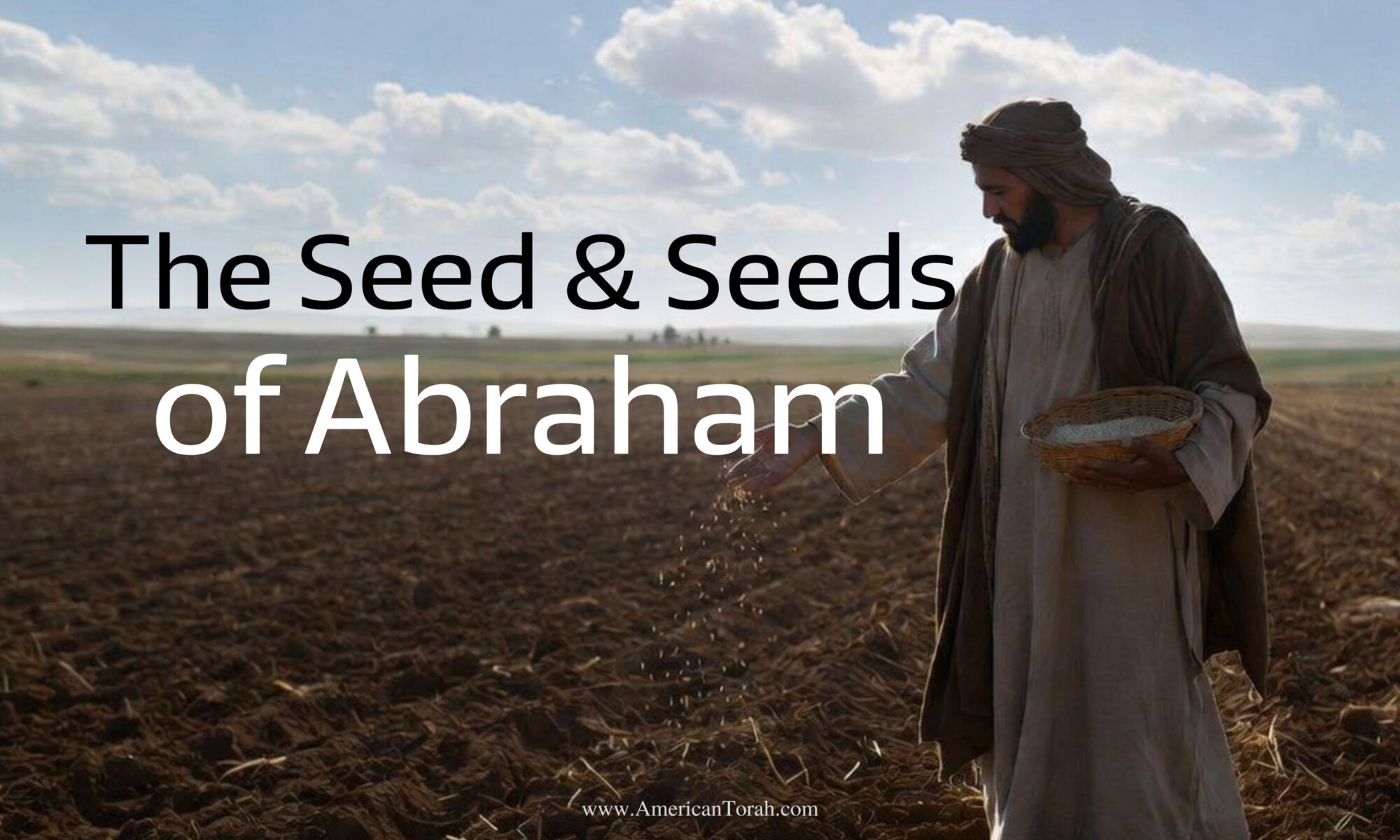
Now the promises were made to Abraham and to his offspring. It does not say, “And to offsprings,” referring to many, but referring to one, “And to your offspring,” who is Christ. Galatians 3:16 ESV
Some people believe Paul was saying that Genesis 12:7 was not a promise to give Canaan to a group of Abraham’s descendants, but to give it only to Christ. “Seed” in Genesis only ever referred to Christ, never to Isaac, Jacob, or all of Israel.
But Paul’s own writings disprove this.
In Romans 4:18 he quoted another verse from Genesis (15:5) with the same Hebrew word to show that Abraham would become the father of many nations. In Romans 11:1 and 2 Corinthians 11:22, he wrote that Israel, whether faithful or not, is the seed of Abraham. Hebrews 2:16 also says that the “flesh and blood” descendants of Jacob (v13) are the seed of Abraham.
Jesus himself, in John 8:37, told a group of unbelieving Jews who wanted to kill him, “I know that you are Abraham’s seed.”
These people, motivated by their hatred of the seed of Abraham, choose to read Paul in the most childish, hyper-literal manner because it allows them to twist it against his real meaning. They’ll recognize his use of metaphor and hyperbole when it suits them and play dumb when it doesn’t.
Seed, in both Hebrew and English, is often used in the singular when referring to an undifferentiated mass of individual objects. “A bag of seed” doesn’t contain a single seed, but potentially many thousands, but we still refer to the mass of seeds as “seed” in the singular. Hebrew does exactly the same thing.
In Galatians 3:16, Paul was combining this quirk of human language with the typological nature of Hebrew prophecy to show that a new covenant doesn’t replace or annul an older covenant, even if both covenants have the same parties. It wasn’t the only time he used a literary device that required some knowledge of Hebrew to understand.
Consider Romans 2:29.
“The Jew is one inwardly and circumcision is of the heart” does not mean that one born a Jew is not a Jew, nor does it mean that a Gentile Christian is the “real” Jew. Paul used the Hebrew meaning of the name Judah–the origin of the term Jew–to inform a metaphor. Judah means “praised” and therefore “Jews” means “praised ones”. Paul was saying that those who are truly praiseworthy are not so because of any physical characteristic, but because of the state of their hearts.
Paul’s letters are often difficult to understand. They are full of subtle–and not so subtle–rhetorical devices, and so are best left to grownups to interpret.
There are some things in them that are hard to understand, which the ignorant and unstable twist to their own destruction, as they do the other Scriptures. 2 Peter 3:16 ESV
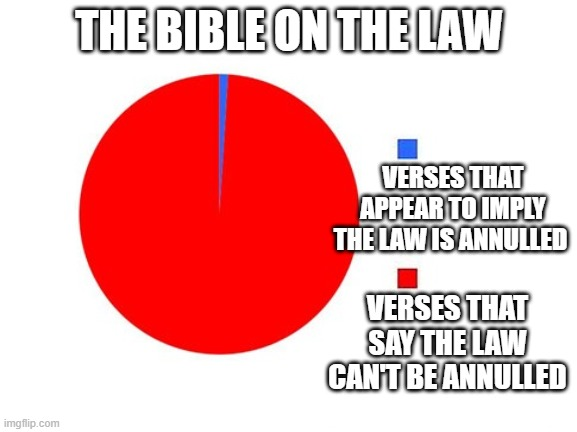
I posted this image on X recently with the caption, ‘But I’m the one “cherry-picking” when I use the clear passages to interpret the ambiguous passages.’ After numerous hostile and rude replies, I added ‘I’d love to have a conversation with someone who disagrees and is intelligent, thoughtful, and civil. I’m tired of the frauds, snakes, and ignoramuses.’
Someone named Langston replied. His comments will be in quote blocks. Mine will be in bold.
Rom 6:14 for you are not under law but under grace. Rom 3:21 now the righteousness of God apart from the law is revealed, being witnessed by the Law and the Prophets, Rom 10:4 For Christ [is] the end of the law for righteousness to everyone who believes.
There’s much more
My reply reflected my irritation:
Are you volunteering for that conversation? Or just shotgunning prooftexts as if your interpretation is the only one possible?
Langston: My point is that the epistles are built upon the idea that the laws given to Israel have not come to us in the same form or fashion. It’s not just a couple obscure verses. Due to the word limit, I wanted to lay a scriptural foundation from the outset.
Me: What do you believe it means for “sin to have no dominion over you” and how is this related to not being “under law” in Romans 6:14?
Langston: Sin, being made known by the law, has dominion over us, for by the law it brings us death and a curse. Yet we have become dead to the law and married to another, and therefore we are no longer under its dominion.
Me: That’s pretty much how I understand it too. We might still have a semantic difference in the word “dominion” or “under”, so let me tell you how I understand that concept, and you can let me know if you see it differently.
If a person is under law (in this case The Law), he is subject to the law’s power to condemn because he broke it. It doesn’t mean he has a legal obligation as a citizen to obey the law, but that his disobedience has given the law authority to punish him.
This is similar to idiomatic expressions like “running from the law”. That doesn’t mean that the legal code is chasing me. It means that the enforcers of the code are chasing me because I broke the code, putting me under the jurisdiction of the legal system. If I had not broken the law, the law would have no authority to come after me.
Since Jesus’ death expunged my criminal record, I have effectively died to the law, removing me from its authority to punish, but not my obligation as a subject of the King to keep the King’s Law.
To continue the analogy of human law, if a judge declared me innocent of criminal charges, that would release me from the authority of man’s legal system, but it would not absolve me from the obligation of every citizen to keep the law. If I despise the freedom that I have been given and continue to disregard the law, the judge will issue a new warrant for my arrest.
(The analogy isn’t perfect. I don’t think Jesus will reject anyone for sins of ignorance or weakness. I believe only our conscious rebellion will put us back under the dominion of sin, aka condemnation.)
Langston: we have been freed from the law and married to another, wouldn’t it follow that my obligation is to another as well?
So that is not to say we are without law, for we have come under the law of Christ.
Me: Absolutely. Our obligation is to Christ our King. We are under him, not under the Law. That doesn’t mean we don’t continue to obey his Law, though. It only means that our relationship to it has changed.
The Law is no longer our master. Where once it was a master to point us to our need for a Savior and also to keep us in bondage to our own sins until we submit to that Savior, now it has become a tool that the Holy Spirit can use to aid us in becoming more like him. The Law has become an advisor instead of an accuser.
Langston: the law was a tutor to bring us to Christ.
In high school I was obligated to comply with certain rules.
Upon graduation, though I can still appeal to the truths I learned, I’m not obligated to do all the things I was in HS.
I would say the same regarding Torah.
Me: I disagree.
There’s always a danger in taking an analogy too far, and Paul’s schoolmaster is a frequent victim.
Jesus said that anyone who relaxes even the least of the commandments in the Torah and teaches others to do the same will be called least in the Kingdom of Heaven, while those who do and teach them will be called great.
Paul and James said that every commandment that God gave can be summed up in the one: love your neighbor as yourself. John said that we only know that we love one another if we are keeping God’s commandments. This seems to me like a consistent doctrine of Jesus and the Apostles that the entire Torah remains God’s perfect standard for all people.
Obviously not all of it applies to everyone and there are some aspects that cannot be kept by anyone, but I can’t think of a single commandment that *can* be kept today that shouldn’t be. I can show how every single one of them shows love for both God and neighbor.
Langston: I don’t think the apostles are least in the kingdom for telling the gentiles that they only need to keep from idols and fornication. Nor is Mark for saying Jesus declared all food clean.
Again, we are freed from the Law. I’m not under the law. I don’t have to make up an analogy.
Me: “I don’t think the apostles are least in the kingdom for telling the gentiles that they only need to keep from idols and fornication.”
I agree, but they didn’t tell them that. Paul also told them to refrain from lying, slave trading, “and whatever else is contrary to sound doctrine”.
I understand that you are referring to the Jerusalem Council in Acts 15, but I’m certain you don’t believe they were telling the Gentiles that they only needed to do those 4 things. I don’t think anyone believes that. Stealing, disrespect of parents, false prophecy, etc. are all still sins, but weren’t mentioned by the Council.
The controversy that the council addressed was concerning salvation and the immediate changes that must happen in order for anyone to be considered “saved”. As the Epistles clearly show, they never meant for anyone to think those were the only rules for Gentiles.
Langston: It’s those things unique to the laws of Moses.
“why do you test God by putting a yoke on the neck of the disciples which neither our fathers nor we were able to bear? But we believe that through the GRACE of the Lord Jesus Christ we shall be saved IN THE SAME MANNER AS THEY.”
Me: The “yoke…neither our fathers nor we were able to bear” isn’t the Law of Moses.
For this commandment that I command you today is not too hard for you, neither is it far off. Deuteronomy 30:11 ESV
The unbearable yoke were the extra rules that the religious leaders had added to the Law.
They tie up heavy burdens, hard to bear, and lay them on people’s shoulders, but they themselves are not willing to move them with their finger. Matthew 23:4 ESV
The scribes and Pharisees put that yoke on the people, not Moses. In Acts 15, those same people, although they had come to faith in Jesus, were trying to put all of the Gentile believers under the same bondage to man-made rules.
God’s Law is much simpler than man’s. Shortly after declaring that all who keep and teach even the smallest of God’s commandments in the Law of Moses will be called great in the Kingdom of Heaven, Jesus said,
“Take my yoke upon you, and learn from me, for I am gentle and lowly in heart, and you will find rest for your souls. For my yoke is easy, and my burden is light.” Matthew 11:29-30 ESV
“Learn from me.” Learn what? Learn what he taught and what he did, and then do the same. Trust him.
Yes, we are saved in the exact same manner as everyone who came before the cross: by the grace of God. Nobody in any era of history was saved from their sins by obedience to the Law. The Law was given so that we would know what sin is, not so that we could be absolved from sins that we have already committed.
Langston: I’ll close here:
Verse 5: But some of the sect of the Pharisees who believed rose up, saying, “It is necessary to circumcise them, and to command them to keep the law of Moses.
Being yoked can just mean in subjection too. The fathers broke the laws. They didn’t handle the yoke.
Me: Agreed. That’s how Jesus used the term ‘yoke’, being in subjection to him. Being yoked isn’t necessarily a bad thing.
Acts 15:5 is a perfect illustration to prove my point. There is no command anywhere in Scripture to circumcise grown men as a condition for salvation or fellowship. Sure, if you want to eat a Passover sacrifice or go to the Temple, then you’d need to be circumcised, but neither of those circumstances were the issue. They were talking about Gentile converts who lived a long way from Jerusalem and were unlikely to ever have the opportunity to do either of those things.
Circumcision for salvation or even for membership in the commonwealth of Israel was a man-made invention, not a commandment from God.
There is a doctrine gaining popularity recently that I refer to as The Doctrine of Divine Remarriage. The short version of this doctrine goes like this:
The Sinai Covenant after the Exodus from Egypt was a marriage between YHWH and Israel. Centuries later, the Kingdom of Israel broke into two kingdoms: Ephraim in the north (sometimes called Israel, Samaria, Shomron, or the Ten Lost Tribes) and Judah in the south. Ephraim fell into idolatry–a kind of spiritual adultery–so YHWH divorced her and let Assyria conquer her and send her into exile from the land.
While in exile, Ephraim made a new covenant (i.e. marriage) with a pagan deity. Deuteronomy 24:1-4 says that if a man divorces his wife, who then marries another man, and then the second man divorces her, the first man can’t remarry her. “For that is an abomination before YHWH.” According to this law, YHWH cannot reunite with Ephraim. She is forever separated from her first husband.
However, Scripture also teaches that all covenant obligations (including marriage) end at death, so if YHWH could die and be resurrected, he could be remarried to Ephraim. He accomplished this by sending Yeshua (YHWH in the flesh) to die at Calvary. His death nullified the Sinai Covenant, and his resurrection enabled him to restore exiled Ephraim to relationship with him through the New Covenant.
When I first heard this idea more than 20 years ago, it sounded so…cool! The Bible clearly uses marriage as a metaphor of the relationship God has with his people, and this seems like a beautiful expression of a husband loving his wife so much that he is willing to give up his life for her. This is exactly what Paul instructed men in Ephesians 5. I love it when God’s patterns emerge in Scripture, linking texts and events that were centuries apart.
Husbands, love your wives just as Messiah also loved His community and gave Himself up for her to make her holy, having cleansed her by immersion in the word. Messiah did this so that He might present to Himself His glorious community—not having stain or wrinkle or any such thing, but in order that she might be holy and blameless. Ephesians 5:25-27 TLV
I had some nagging doubts, though. This teaching is not given explicitly anywhere in Scripture, and there are some things about the story that I couldn’t reconcile. For example, who is the second husband that Ephraim was supposed to have married? And what does this mean for the Southern Kingdom of Judah?
Last year I took a closer look at all of the covenants in the Bible and how they related to each other, and I quickly became convinced that the Doctrine of Divine Remarriage just doesn’t work with what the Bible says. I very briefly mentioned some of my doubts about this doctrine in the video series, Covenants of Israel (YouTube link). But in this article, I’m going to address this doctrine specifically and in much more depth.
I gave a brief overview of the Doctrine of Divine Remarriage, but before I can tell you what’s really wrong with it, I need to break it down in more detail. This doctrine is usually given with the six beliefs listed below, which I will do my absolute best to present as objectively and accurately as possible. Please note that I am describing the beliefs of those who teach the doctrine under question, not my own beliefs.
Belief one: The Sinai Covenant is a marriage covenant between YHWH and Israel.
Ezekiel, Jeremiah, Hosea, and other prophets frequently use marital language to describe the covenant relationship between YHWH and Israel. See this passage, for example.
“Again I passed by and saw you, and behold, you were truly at the time of love. I spread the corner of my garment over you and covered your nakedness. I swore to you and entered into a covenant with you,” says Adonai. “So you became Mine.” Ezekiel 16:8 TLV
Belief two: YHWH divorced Ephraim (the Northern Kingdom of Israel).
This is based on one passage from Jeremiah:
I noted that when backsliding Israel [Ephraim] committed adultery I sent her away and gave her a certificate of divorce. Yet, unfaithful Judah, her sister, did not fear. Instead she also went and committed adultery. Jeremiah 3:8 TLV
There are two other passages that I have seen referenced, Isaiah 50:1 and Hosea 2:1-3, but neither of these are actually about divorcing Ephraim. Isaiah is addressed to Judah and says that YHWH sent away the mother of Judah, while Hosea is addressed to Ephraim but also says that YHWH sent away their mother, not Ephraim.
Some teachers include post-crucifixion grafted-in gentiles with Ephraim, but those aren’t the people that YHWH divorced in Jeremiah. The inclusion of gentiles in the promises and covenants of Israel is a separate topic. They don’t need to re-covenant with God, because they weren’t part of the original covenant and divorce.
Belief three: Ephraim made a covenant with another god
Some teachers of this doctrine don’t make this explicit, but the better ones do. This is a requirement for the Deuteronomy 24 law to apply, though, so it’s necessary for the doctrine to work.
Hosea 2 and Jeremiah 3 show that Ephraim certainly engaged in spiritual adultery in the form of idolatry prior to their exile from the land. Jeremiah 3:1 even cites the law in Deuteronomy 24 in reference to the possibility of YHWH taking back Judah who was behaving in the same manner.
I think it’s safe to assume that Ephraim continued to engage in idolatry after their exile. They were scattered far beyond the borders of Assyria and most of them eventually forgot their identity as Israel. (See this video playlist, Who Is Israel?)
This particular belief requires one of two assumptions for it to be true:
Ephraim made an explicit covenant with a false god, but there is no record of that covenant in the Bible or historical records.
Sexual union itself creates a marriage covenant whether there is an explicit agreement between the two parties or not. In the case of Ephraim, this would take the form of collective idolatry.
Belief four: Ephraim was divorced from that other god
I haven’t heard this belief taught by any teacher of the Doctrine of Divine Remarriage, but it is necessary for the Deuteronomy 24 law to come into play. The law is very clear that it only applies if the woman is legally divorced from her first and either legally divorced or widowed by her second husband. If she is still married to the second, then she is not free to marry anyone else, no matter who it is.
As with the covenant marriage in Belief Three, there is no historical or biblical record of Ephraim being divorced from her second husband nor of that husband having died, so it has to be assumed.
Belief five: Death nullifies all legal ties of the one who dies
This seems like common sense, and Paul says as much in Romans 7:1-7, which says in part,
Accordingly, she will be called an adulteress if she lives with another man while her husband is alive. But if her husband dies, she is free from that law, and if she marries another man she is not an adulteress. Romans 7:3 ESV
According to this belief, all laws, debts, and covenants that bound a person in life end at death. If the person is then resurrected, he is free to carry on his life as if he had never been bound by them at all.
Belief six: YHWH died and resurrected in the person of Yeshua, enabling his remarriage to Ephraim
I am assuming that you, the reader, agree with me that Yeshua is YHWH in the flesh. If you don’t, then you probably reject this doctrine on those grounds, and this is all a moot point to you. (Please don’t try to argue about Yeshua’s divinity in the comments. This is not the place.)
I don’t think that anyone believes that remarriage to Ephraim is the only reason that Yeshua came to die. He died for the sins of the whole world, after all, not just half of Israel. However, according to the Doctrine of Divine Remarriage, this is a major secondary purpose. If he had not died, he would have been free to make a new covenant with Judah–and even the rest of the world–but Ephraim would be permanently cut off, at least from a marriage-covenant with YHWH. God promised throughout the Torah and the Prophets that he would restore Ephraim to covenant with him, this was the only way he could keep his word.
What’s wrong with the Doctrine of Divine Remarriage?
On the surface, this seems like a pretty strong argument. It appears that Beliefs Three and Four are the only ones that involve speculation and assumptions, and if the other beliefs are true, these two seem very reasonable. Unfortunately, a closer examination will reveal some problems with all six beliefs, some much more serious than others.
I’m not trying to offend anyone with this. I don’t want to hurt anyone’s feelings or make anyone look bad. My only purpose is to promote sound biblical doctrine. I know that it can be difficult to give an objective hearing to anything that contradicts a deeply held and loved belief. I’ve been there many times myself!
Here’s what I would like you to do: Consider reading the following as if you had just heard about this doctrine today and had no emotional attachment to it. Be curious. As you read, don’t assume any motives or beliefs on my part that aren’t clearly in evidence. Most of all, check everything I say against Scripture–not against what you think you remember is in the Bible, but what is actually there.
One: Is the Sinai Covenant a Marriage?
The answer depends on how you define a marriage.
Considering the numerous passages from the prophets that describe God’s relationship with Ephraim and Judah in marital terms, there is no doubt at all that the Sinai Covenant was intended to be analogous to marriage at the very least. Were those prophecies meant to be metaphors only, or is that relationship actually a marriage of husband and wife?
There is no clear definition of marriage in the Bible, but from numerous passages that describe the making and operation of a marriage, we can get a good picture of how the ancient Hebrews who wrote the Bible thought of it. There are simply too many verses to list them all, so here are a few highlights:
Malachi 2:14 shows that marriage is a kind of covenant, although it clearly doesn’t require the same formality that covenants usually require. It can include documentation, witnesses, and sacrifices–and sometimes probably did–but doesn’t have to.
Genesis 2 and many other passages show that a man is to leave his parents to become one flesh with his wife, including a sexual union. This doesn’t fit with Sinai being a marriage in any way. God didn’t have any parents to leave and there was clearly no sexual union. God did not become one flesh with Israel. The closest they came to this was when God attempted to write his Law on their hearts, but they were unable to accept it (Exodus 20:18-21, Deuteronomy 18:16-17, Galatians 3:19).
Exodus 21:10, Numbers 32:16-27, 1 Corinthians 7:3-5, and Ephesians 5 show that a husband owes his wife love, protection, shelter, food, and sexual relations. Except for sexual relations, these are all things that God promised to Israel in the Torah, so long as they continued to be faithful to him.
Genesis 3:16, Numbers 30, 1 Corinthians 7:3-5, and Ephesians 5 along with numerous commands in Torah show that a wife owes her husband ongoing sexual relations and fidelity, respect, and obedience. Except for sexual relations–again–these are all things that we owe to God without reservation.
These points don’t all align well with the idea of Sinai being a literal marriage covenant. There are two fatal flaws in defining that way.
The first flaw is that there is no physical “one flesh” relationship. God is a spirit (John 4:24), not a man (Numbers 23:10), while Israel is a kingdom of priests (Exodus 19:6, Revelation 1:6), not a woman. Clearly this relationship cannot be consummated in the same way as a husband and wife. God also metaphorically describes Israel as his son (Exodus 4:22, etc) and as various animals (Deuteronomy 32:11, Psalm 100:3, etc). If the marriage was literal, some of these would make him to be describing himself as the worst possible kind of sinner.
The second flaw is that God made a covenant with one people at Sinai, not two, while some of the marriage metaphors in the prophets speak of each of the kingdoms of Israel as a separate bride or as children of one or two brides. The entire people of Israel agreed to God’s terms as one kingdom in Exodus 19:8, not as two. The division of Israel into two kingdoms was foreshadowed in the relationships of Jacob’s sons and other hints in Torah, but the actual division didn’t happen until after the third king of Israel had died. There was only one bride at Sinai, just as there is only bride in any of the marriage metaphors used in the New Testament.
God’s relationship to Israel can be a marriage in metaphor only. (Or perhaps I should say it the other way around: The marriage of man and woman is intended to be an earthly image of a higher spiritual reality in God’s relationship with his people.) The Sinai Covenant as an analog of marriage is a very strong one in which abundant crops and descendants parallel actual children and worship parallels sexual union, but it is still analogous to marriage, not an actual marriage of man and woman.
Two: Did YHWH divorce Ephraim?
Jeremiah 3 clearly says that YHWH gave Ephraim a bill of divorce, and the first chapter of Hosea could reasonably be said to contain that bill:
And the LORD said, “Call his name Not My People, for you are not my people, and I am not your God.” Hosea 1:9 ESV
However, we have to deal with the same question of metaphor vs reality, and there are a couple of problems with interpreting this as a literal divorce of a wife by her husband.
First, if the marriage between YHWH and Israel was only like marriage and not an actual marriage, then the divorce must also be like divorce and not actual divorce.
Second, even if Sinai was a literal marriage, there was only one bride, not two, and you can’t divorce half of a wife.
It’s true that the prophets describe Ephraim and Judah as sisters. Ezekiel 23 even names them Oholah and Oholibah and says that YHWH found them in Egypt and married them. This sounds as if God married two brides at Sinai, despite Exodus describing only one kingdom and people.
However, Ezekiel also says that these were two daughters of the same woman, but what woman would that be? It’s remotely possible that the mother is a reference to Sarah or Rebekah–certainly not Jacob’s 4 wives–but all of that is indisputably a metaphor. The millions of Hebrews who came out of Egypt were not two literal women with a single literal mother. They didn’t literally “play the whore” while they were in Egypt. It’s far more likely that the one mother of Ephraim and Judah was the united Kingdom of Israel that agreed to the covenant at the foot of Sinai.
Ephraim and Judah were only present independently at Sinai as the seed of division that had been planted by the rivalries of Jacob’s sons described in Genesis. That seed wouldn’t divide into two separate kingdoms for several more centuries. Israel was not two women rescued from Egypt, but one people who was metaphorically represented as the mother of two rebellious daughters in Ezekiel 23.
If the Sinai Covenant was a metaphor and the two daughters of Israel in Ezekiel 23 were metaphors, then the divorce of one of those daughters must also be a metaphor.
Three: Did Ephraim make a covenant with another god?
There are two problems with the idea that Ephraim made a covenant with another god after being sent into exile by Assyria.
The first problem is that there is no record of such a covenant being made. If it is so central to Yeshua’s purpose in coming to earth, I would expect some indication of it in Scripture. As far as I know, there is nothing about this in the canonical scriptures nor in extra-biblical ancient writings.
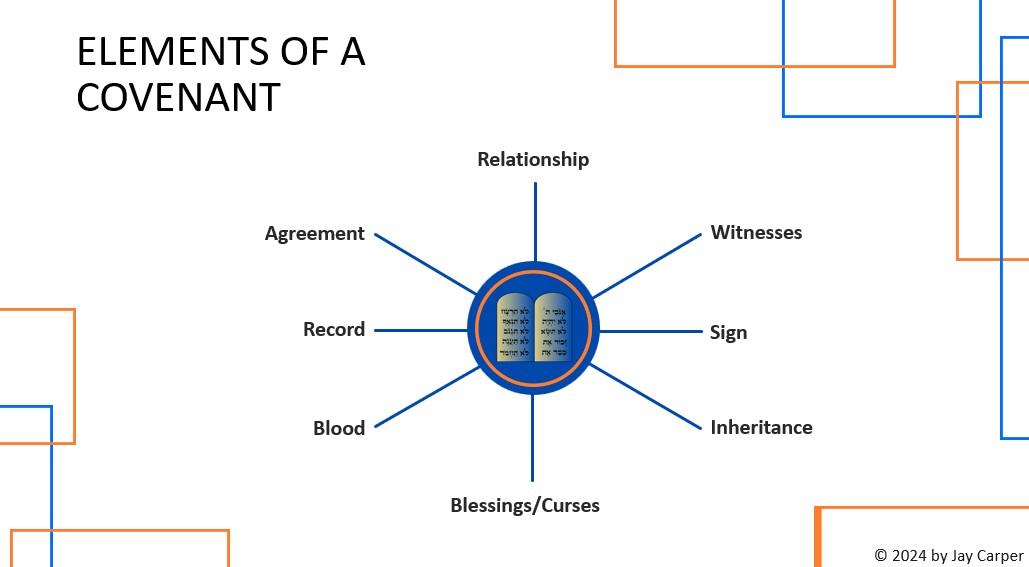
Of course, absence of evidence is not necessarily evidence of absence, but I don’t see how such a covenant would have been possible. A covenant according to the standards that YHWH seems to follow in the Bible requires a sacrifice, witnesses, and agreement between the parties–among other elements.
Eight elements that seem to be common to divine covenants in the Bible. See https://jaycarper.com/covenants for more information.
When YHWH makes a covenant with a group of people, he always operates through an intermediary with legitimate authority over all those with whom he would make the covenant. After the Flood, he made a covenant with all life on earth through Noah. He made a covenant with Abram’s descendants mediated by Abram. At Sinai, he made a covenant with Israel mediated by Moses.
Who was there in the Assyrian exile who had authority to make such a covenant on behalf of all Ephraim? At Sinai all the people agreed to the covenant with YHWH. How would the people of Ephraim agree to a national covenant when they had been scattered across thousands of miles into different lands, languages, and cultures?
In order for the Deuteronomy 24 law to be applicable to Ephraim, she must have made a covenant (“married”) some other god while in exile, and so this the Doctrine of Divine Remarriage must assume that it is true without any evidence. Some teachers have recognized this problem and proposed a solution. They assert that human marriage only requires a sexual union without necessarily including an intent to create a lifelong husband-wife relationship. In other words, sex equals marriage.
But this doesn’t hold up to close analysis either. Becoming “one flesh” physically is a requirement of marriage, but it does not create a marriage in itself. Consider these points:
In 1 Corinthians 6:16, Paul points out that a man who is joined to a prostitute becomes one flesh with her, but that can’t mean that he marries her, because she would already be married to someone else.
Exodus 22:16-17 says that a father can refuse to allow his daughter to marry a man who seduced her, but if sex made a marriage, then she would already have married the man.
In John 4:16-17, Yeshua told the Samaritan woman that she had been married five times, but the man she was living with at that time had not married her. The implication is that she was living with the man as a wife, but had not made a formal commitment of marriage.
In my opinion, equating sex with marriage is a man-made doctrine. If two unmarried people have sex without intending to make a lifelong commitment, they aren’t getting married; they’re committing fornication.
Four: Was Ephraim divorced from her pagan god/husband?
This is another belief that must be assumed since there is no historical or biblical evidence of her marriage to a pagan god, let alone of him later giving her a bill of divorce. I’ve shown how God’s “marriage” to Ephraim was only a metaphor used as a prophetic picture of God’s relationship with his people, and that his “divorce” of Ephraim was also a metaphor.
Gods–even false, pagan gods–cannot make a marriage with a group of people in the same way that a man can with a woman, so the language of marriage and divorce in all of the prophecies concerning God and Israel (unified and separate as Ephraim and Judah) is always metaphorical, not literal.
Five: Does Yeshua’s death nullify the Sinai Covenant?
Based on the following points, I think it’s safe to say that legal bonds–specifically marriage–really do end at death:
In Romans 7:1-7 and 1 Corinthians 7:39, Paul argued that marriage and other legal bonds end at our physical death, and that, through the death of an infinitely perfect man, Yeshua, we are counted as having died and been resurrected spiritually, breaking our spiritual bonds too.
Leviticus 21:1-4 says that a priest may make himself ritually unclean by preparing his immediate relatives for burial, with the exception of his wife. I believe this is because she stops being his wife upon her death, and she is no longer his immediate relative at that point. His responsibility as a priest takes precedence, and he needs to find someone else to perform that task for him.
In Matthew 22:23-30, Yeshua told the Sadducees that a woman was widowed and remarried multiple times will be no one’s wife after the resurrection, again indicating that marriage ends at death.
However, there are three serious problems with saying that this principle nullifies the Sinai Covenant between YHWH and Israel.
First, Romans 7 doesn’t say that death annuls all previous bonds as if they had never existed. Rather, it breaks those bonds so that they no longer restrict the person going forward. If a man dies, his wife is no longer married to him, and she is free to marry another. She is not free, however, to pretend as if she was never married to her late husband and then call her children illegitimate.
Marriage annulment is not a biblical concept.
The law about remarriage in Deuteronomy 24 doesn’t say anything about the husband or wife dying and rising from the grave. Even if such a miracle happened, the former marriages would still be former marriages. Death can’t end what has already ended. The first husband would still not be able to remarry his ex-wife, because he had been married to her at one time, he had divorced her, and she had married another man.
Second, we see from those passages that describe Yeshua interacting with the Father and the Holy Spirit that, although he might be YHWH, he is not all of YHWH. We can’t say that the Son made this covenant and the Father made that covenant when the Bible only says that YHWH made all of them. Israel didn’t make a covenant with the Son of God, but with all of God, and all of God didn’t die at Calvary. Only the Son died.
In John 10:17, Yeshua said, “the Father loves me, because I lay down my life that I may take it up again,” showing that only the Son and not the Father came to die.
In Acts 2:24, Peter said, “God raised him up,” referring to the Son, not the Father or the Holy Spirit.
In Galatians 1:1, Paul wrote that God the Father rose Yeshua from the dead, not that he rose himself or the Spirit from the dead.
I can’t nullify my own legal bonds by cutting off my arm or allowing my son be killed. My death alone can break my legal bonds. “Each one shall be put to death for his own sin,” according to Deuteronomy 24:16, just a few verses after the law concerning remarriage to a divorced and remarried wife.
Third, if Yeshua’s death nullified one legal bond on YHWH, then by the same principle it must nullify all legal bonds on YHWH.
God’s covenant with Noah, in which he promised never to destroy all life by a flood again (Genesis 9:11), has been canceled, and God is now free to send another worldwide flood.
His covenant with Abraham, in which he promised to give Abraham’s descendants land as an “everlasting possession” (Genesis 17:8) has been canceled.
His promise to bless his people when they are faithful and obedient (Deuteronomy 29:1-14) has been made meaningless.
His “everlasting…and secure” promise to ensure David would always have a son to sit on the throne of Israel, a promise that ought to be fulfilled in Yeshua, is now null and void. It was neither everlasting nor secure.
If the Son’s death nullifies a covenant made by the whole of YHWH, then it seems that the death of any individual Israelite ought to nullify any covenant made by the whole nation of Israel. On the contrary, the covenants of Israel are passed down from parent to child, enduring through the deaths of countless generations.
If, on the principle of death ending all legal bonds, Yeshua’s death canceled any covenant of YHWH, then it canceled all covenants of YHWH. Paul was wrong to write that “They are Israelites, and to them belong…the covenants” in Romans 9:4, because those covenants are no longer in effect. We gentiles have not been brought near to the covenants of promise that he referred to in Ephesians 2:12, because those covenants no longer exist.
The death we have through Yeshua, as described in Romans 7, breaks our bondage to the Law (see v4), not God’s bondage to any covenants. His death applies to all people, not just to Ephraim. It is a spiritual death that each one of us undergoes as individuals (not as a nation!) to a debt that we accrued through sins against the Law, not to a covenant that God made with Israel as an act of divine grace.
I meant it when I wrote that I don’t mean to offend anyone by writing this article, but what a horrendous doctrine that makes God out to be a liar and a cheat who makes covenant after covenant, knowing full well that he will throw them all out without having to fulfill their ultimate promises! On what basis should we trust such a god to keep any of his promises? Maybe he has created some other legal loophole that we don’t know about.
Six: Did Yeshua resurrect, in part, to enable YHWH’s remarriage to Ephraim?
This question hardly needs answering at this point. YHWH did not literally marry or divorce Ephraim and so he has no need to remarry her. He made numerous covenants with Israel and individuals and clans within Israel, each one enhancing a relationship which already and continued to exist. Ephraim, despite her many sins, was never outside of her covenants with God, but only temporarily repudiated and exiled as a corrective measure. None of those covenants will ever end until heaven and earth themselves are ended.
So why did Yeshua have to die?
Yeshua’s death had at least two major effects: He became the sacrificial victim that inaugurated the New Covenant and his blood removes the spiritual debt of sin from his people
The New Covenant
As I demonstrated in the Covenants of Israel video series (Rumble link) and noted in the illustration above, divine covenants are established by the blood of a sacrificial victim. You can see this in the examples of God’s covenants in the Old Testament, but Hebrews makes it explicit.
…for where a covenant is , the death of the covenant-victim to come in is necessary, for a covenant over dead victims is stedfast, since it is no force at all when the covenant-victim liveth, Hebrews 9:16-17 YLT
(My apologies for quoting Young’s Literal Translation, but most English Bible translators introduce too much commentary in these verses because they don’t understand covenants. Young’s is hyper-literal–often so literal that it’s difficult to understand–so translator bias or cultural ignorance is less of a factor.)
The New Covenant was established and was fully in force at the cross. It includes promises that haven’t been fulfilled yet, but all covenants involve ongoing fulfillments. The forgiveness and full restoration of the people of Israel to the land, the defeat of all Israel’s enemies, the personal reign of the Messiah in Jerusalem, a through understanding of God in the hearts of his people, and the resurrection and judgment of all people are all aspects of the New Covenant that we have yet to see, but their future reality was guaranteed when Yeshua said “It is finished”.
Forgiveness of Sin
I won’t pretend to understand exactly how spiritual accounting works. I don’t even understand financial accounting!
Paul explained in Romans 5, Colossians 2:13-14, and Ephesians 1:7 that our transgressions against God’s Law created a spiritual debt that we could never repay. Although the penalty was both physical and spiritual death, our blood could never elevate us to the infinite level of righteousness required to be reconciled to our Creator. Animal sacrifices could only temporarily remove the uncleanness of sin from our flesh and primarily covered sins of weakness, ignorance, and accident. They had no impact at all on the spiritual debt incurred by sins of rebellion.
YHWH’s solution was to send Yeshua to live a perfectly sinless life and give up his life to pay that debt for us. His blood zeroes out (reconciles/justifies) our spiritual balance books, in a way bringing us through death into new spiritual life through him. His perfect righteousness now counts in God’s books as ours.
Yeshua’s blood doesn’t nullify any covenants made by YHWH with anyone. It buys the debt we owed to the Law because of our sins, justifying our spiritual balance sheets. In his death we have obtained forgiveness, whether we understand how it works or not.
And in his resurrection, he took authority over death itself. We, who sincerely pledge our faithfulness to him, accepting the forgiveness of our debt and his lordship over our lives, have been given a promise of eternal life, whether we can wrap our minds around living forever or not.
Therefore he is the mediator of a new covenant, so that those who are called may receive the promised eternal inheritance, since a death has occurred that redeems them from the transgressions committed under the first covenant. 16 For where a will is involved, the death of the one who made it must be established. 17 For a will takes effect only at death, since it is not in force as long as the one who made it is alive. 18 Therefore not even the first covenant was inaugurated without blood. Hebrews 9:15-18 ESV
Most English translations of this passage in Hebrews translate διαθήκη (diatheke) as “covenant” in vs 15 and 18, but as “will” in vs 16-17. This is a bizarre switch. Hebrews 9:16-17 is referring to the sacrificial victim of the covenant, not to a person who is instigating the covenant, nor to a person who has died and left an inheritance.
Reasons We Can Know Hebrews 9:16-17 Is about Covenants not Wills
There are four reasons we can know this without reasonable doubt:
First, a “last will” isn’t the topic in Hebrews. It spends several chapters talking about covenants and then switches to wills for just 2 verses? Verse 18 clearly shows that 16-17 are talking about covenants, not last wills. This passage has nothing at all to do with last wills.
Second, Hebrews 9:16-17 is the only place in the Bible where διαθήκη is translated as “will” instead of “covenant”. This is bizarre and completely contrary to the context of these verses. It should be translated as covenant here, like everywhere else.
That’s not just my opinion.
The ESV Global Study Bible includes a footnote stating that “covenant” is also a possible translation: “…or an ancient Near Eastern “covenant.” Making such covenants included offering an animal sacrifice. Thus both are carried out only after a death.” However “possible” seems to be a severe understatement.
Here’s what John Wesley wrote about v16:
I say by means of death; for where such a covenant is, there must be the death of him by whom it is confirmed – Seeing it is by his death that the benefits of it are purchased. It seems beneath the dignity of the apostle to play upon the ambiguity of the Greek word, as the common translation supposes him to do.
Adam Clarke cites a “learned and judicious” friend with the initials J.C. for this alternate translation:
For where there is a covenant, it is necessary that the death of the appointed victim should be exhibited, because a covenant is confirmed over dead victims, since it is not at all valid while the appointed victim is alive.
He also cites Gilbert Wakefield for this translation:
For where a covenant is, there must be necessarily introduced the death of that which establisheth the covenant; because a covenant is confirmed over dead things, and is of no force at all whilst that which establisheth the covenant is alive.
And Clarke adds, “This is undoubtedly the meaning of this passage; and we should endeavor to forget that testament and testator were ever introduced, as they totally change the apostle’s meaning.”
Third, God’s other covenants were established with a sacrifice. The texts describing the Noahic, Abrahamic, Sinai, and Aaronic include the sacrificial ceremony explicitly. It’s the same with man-made covenants, such as the one between Jacob and Laban, and the one between Abraham and Abimelech.
For the Noahic Covenant:
Then Noah built an altar to the LORD and took some of every clean animal and some of every clean bird and offered burnt offerings on the altar. Genesis 8:20 ESV
For the Abrahamic Covenant:
He said to him, “Bring me a heifer three years old, a female goat three years old, a ram three years old, a turtledove, and a young pigeon.” And he brought him all these, cut them in half, and laid each half over against the other. But he did not cut the birds in half. Genesis 15:9-10 ESV
For the Sinai Covenant:
And Moses wrote down all the words of the LORD. He rose early in the morning and built an altar at the foot of the mountain, and twelve pillars, according to the twelve tribes of Israel. And he sent young men of the people of Israel, who offered burnt offerings and sacrificed peace offerings of oxen to the LORD. And Moses took half of the blood and put it in basins, and half of the blood he threw against the altar. Then he took the Book of the Covenant and read it in the hearing of the people. And they said, “All that the LORD has spoken we will do, and we will be obedient.” Exodus 24:4-7 ESV
Not every text concerning a covenant describes the sacrifices involved, but the pattern is clear.
Fourth, the New Covenant was not made between the Son and Israel/Judah. It was made between ALL of God and Israel/Judah, and only the Son died. The Son is the sacrificial victim that sealed the New Covenant, not a rich man who died and left postmortem instructions to his survivors.
Behold, the days are coming, declares the LORD, when I will make a new covenant with the house of Israel and the house of Judah, not like the covenant that I made with their fathers on the day when I took them by the hand to bring them out of the land of Egypt, my covenant that they broke, though I was their husband, declares the LORD. Jeremiah 31:31-32 ESV
The New Covenant Does Not Replace the Old
We can also know that the establishment of a new covenant does not annul or override a previous covenant. We can know this by two reasons:
First, none of God’s previous covenants annulled or overrode any of his other covenants. God’s covenant with Israel at the end of the wilderness journey (the Deuteronomic Covenant, which was not a renewal of the Sinai, but a new covenant “besides the covenant that he had made with them at Horeb” per Deuteronomy 29:1) didn’t replace his covenant with Phinehas, which didn’t replace his covenant with Aaron, which didn’t replace the Sinai Covenant, which didn’t replace the Abrahamic, which didn’t replace the Noahic.
Second, Paul says in Galatians 3:15 that even with a man-made covenant, a new covenant doesn’t annul or modify an older one. Then in v17 he gives an example of how this applies to God’s covenants: the Sinai Covenant did not annul the Abrahamic Covenant. Each covenant has a different purpose (v18-19) and so they operate simultaneously.
To give a human example, brothers: even with a man-made covenant, no one annuls it or adds to it once it has been ratified. Now the promises were made to Abraham and to his offspring. It does not say, “And to offsprings,” referring to many, but referring to one, “And to your offspring,” who is Christ. This is what I mean: the law, which came 430 years afterward, does not annul a covenant previously ratified by God, so as to make the promise void. For if the inheritance comes by the law, it no longer comes by promise; but God gave it to Abraham by a promise. Galatians 3:15-18 ESV
The New Covenant was in full force from the moment Jesus died, yet when Hebrews was written 30-50 years later, it did not replace the Sinai Covenant. Hebrews plainly says they are both in operation at that time, even if one is “becoming obsolete and growing old” and “is ready to vanish away”.
In speaking of a new covenant, he makes the first one obsolete. And what is becoming obsolete and growing old is ready to vanish away. Hebrews 8:13 ESV
If both covenants were in force at one time–just like all of the previous covenants that God has ever made–then modern Christian theology has a completely scrambled idea of how covenants work.
The Letter to the Hebrews is so egregiously and commonly misinterpreted as to make it say the opposite of what it actually says. It doesn’t say that the New Covenant replaces the old nor that the priesthood of Jesus replaces that of Aaron. It says that the New Covenant is *superior* because it has superior promises and a superior priesthood.
Those very few verses that appear to say otherwise are easily interpreted in complete harmony with all the rest of the biblical testimony on covenants without any literary sleight of hand. It only appears to be sleight of hand because the harmonized interpretation is so foreign to what our churches have been teaching us.
We shouldn’t be surprised.
O LORD, my strength and my stronghold, my refuge in the day of trouble, to you shall the nations come from the ends of the earth and say: “Our fathers have inherited nothing but lies, worthless things in which there is no profit. Jeremiah 16:19 ESV
For a more detailed look at the nature of covenants and how they interact with each other, see this video. Please watch the whole thing to the end.
The first covenant that God made with the people who could be called Hebrews was introduced in Genesis 15 and given more detail in Genesis 17. God made a covenant with Abraham to make him a father of many nations (Genesis 17:5) and to give to one line of his descendants, the land of the Canaanites between the river of Egypt and the River Euphrates (Genesis 15:18, 17:8). These descendants would not come through all of Abraham’s immediate children, but specifically through one son of promise, Isaac. In the next generation, the covenant would once again only pass down to one son, Jacob, because Isaac’s other son, Esau, despised God and the covenant. In the third generation, all of Jacob’s sons inherited the covenant from him, becoming the patriarchs of the Twelve Tribes of Israel.
Abraham had eight sons (one each with Hagar and Sarah and six with Keturah), and it seems likely that he also had daughters. Isaac had two sons that we know of, and Jacob had twelve, plus Dinah and an unknown number of other daughters according to Genesis 37:35 and 46:7. Only the sons of Abraham and Isaac are are listed as as having founded nations, and only the sons of Jacob founded tribes in Israel. To an extent, this could be attributed to the universal practice of mankind to attribute nations to patriarchs, not matriarchs, but primarily because that is God’s practice also.
Except for Dinah, their daughters are unnamed in the text, not because they weren’t important to their families or to God, but because Genesis isn’t a family history. It’s a covenant history, and God’s covenant with Abraham is passed down through the many generations from father alone. Daughters are also born into that covenant, but they don’t pass down the covenant of their fathers to their children; they pass down the covenant of their husbands.
Fast forward a few centuries to the wilderness between Egypt and Canaan…
The accounts of the Twelve Spies, the five daughters of Zelophehad, and the division of the Promised Land among the tribes clearly illustrates this principle. Patriarchal tribal identity is a crucial aspect of the divine order for both spiritual and practical reasons.
Land inheritance in the Torah (the first five books of the Bible) is more just a division of territory. It is a tangible fulfillment of the covenant with Abraham as passed down to all of his descendants through Isaac and Jacob. The boundaries laid out in Numbers 36 speak to a deeper spiritual reality, one in which inheritance in the Promised Land serves as a manifestation of divine grace and the delegated authority and responsibility that accompanies it. Just as rings in Biblical times symbolized authority and submission, so too does the allocation of land reflect the Hebrew people’s relationship with God and their duty to maintain the sanctity of their covenants with him.
Torah mandates that daughters who inherit land must marry within their tribe. This isn’t just patriarchal flexing; God (or Moses) wasn’t trying to keep women in their place by denying them the means to provide for themselves. By God’s design, tribal and national identity–and therefore generational inheritance of the Abrahamic Covenant–is patrilineal (passed down through male descendants). If your father was a member of the tribe of Issachar, then so are you. If a woman marries a member of the tribe of Zebulun, then she becomes a member of that tribe, and all her children will be also.
When Zelophehad’s daughters asked Moses for an inheritance in their father’s name in Numbers 27:1-11, they weren’t trying to change the way God reckoned nationality. To the contrary, they were honoring it by preserving their father’s place in that reckoning. However, if they were to inherit land within the allotment of the tribe of Manasseh and then marry a man of Benjamin or Judah, their children would belong to their husband’s tribe and would eventually inherit Zelophehad’s land within the territory of Manasseh. If other women later inherited in similar circumstances, the boundaries of the tribes would soon be a meaningless patchwork.
From a certain perspective, this confusion might seem like a good thing. Wouldn’t a unified nation without tribalism be a much better state of affairs, discouraging internal squabbles and simplifying international relations?
If God wanted a single people without tribes, he wouldn’t have told Moses to inscribe twelve names on the shoulders of the High Priest, he wouldn’t have put twelve stones on the High Priest’s breastpiece, he wouldn’t have commanded twelve loaves to be kept on the Shewbread Table in the Tabernacle, he wouldn’t have given Yeshua twelve disciples, nor installed twelve foundation layers to the New Jerusalem, nor twelve gates into the city.
Although the twelve tribes are completely mixed and mostly hidden today in exile, for his own reasons, God wants the twelve tribes to remain distinct in the Promised Land. When they return in the Millennial Kingdom, they will once again be assigned land within tribal territories. (Ezekiel 47:13) Part of those reasons, I believe, involves the authority that is inherent in the passing of a covenant from one generation to another. A father must have authority over his son in order to subject his son to a covenant, and therefore must have authority over all of that son’s children, and so on throughout all generations.
In this same principle, God commanded that the members of tribes should camp together in the wilderness, each under the banner of his own clan, and that the army (technically, the militia, since the army included every able bodied male twenty years and older) should be organized by families. (Numbers 1:3) Judges were also appointed and given authority based on their tribal and clan affiliations. (Deuteronomy 1:9-18)
If a family on one plot of land is under the authority of the patriarch of Ephraim and the family on the next plot of land is under the authority of the patriarch of Naphtali, national defense and civil law becomes as confused as tribal boundaries and much more likely to incorporate favoritism for the judge’s own tribesmen. If the national Judge or King makes a call to arms, without instantaneous and secure communications, how would the militia know where to assemble or to whom they should report? God’s plan for land inheritance solves both of those problems.
In Deuteronomy 1, Moses says that he chose one man from each of the tribes to scout out the land. Numbers 34 outlines the boundaries of the Promised Land and gives the names of the twelve men–one from each tribe–whom God selected to divide it. Moses and God could have chosen women for these roles if they had wanted to. Neither of them bowed to cultural expectations in other matters, such as the Shemitah year, dietary rules, and the sacrificial monopoly, so they certainly could have allowed female priests or appointed a woman to participate in the surveying and division of the land, yet they didn’t. Both the survey and the division had to be executed by men representing each of the twelve tribes, because only men have the authority to speak for their people on covenantal questions.
When the patriarchs of Manasseh explained the practical difficulty of allowing daughters to inherit land in Numbers 36, they weren’t trying to oppress women. They too were trying to honor Zelophehad, the covenant, and all of the people of Israel.
There are no prohibitions in Torah against women owning property or operating businesses, but only sons routinely inherit land from their fathers. As detailed in Numbers 36:6-9, if a man dies with only daughters, then his daughters will inherit his property as if they were sons with the one restriction that they must marry a man from his tribe so that the land won’t permanently become the territory of some other people. The point isn’t to restrict women, but to protect the sanctity and continuity of God’s covenant with Abraham. Ultimately, the Torah’s directives on tribal land inheritance in Numbers 36 are far more than a matter of property distribution. They encapsulate the very essence of the covenant between God and his people.
Women are vital in God’s covenantal order and his plan of redemption for mankind. Where would we be without Sarah, Ruth, and Mary? But however much our modern ears may rebel against it, God counts nations by their patriarchs, and covenants in the Bible are inherited from fathers. Zelophehad’s daughters respected their father, their tribe, and God on this matter. We should too.
Hear more about Zelphehad’s daughters and God’s promises in this video on Joshua 17.
There’s a growing dispensationalist belief among Christians that the Law of Moses is distinctly different from the Law of God and even that the Law of Moses is in some ways incompatible with the Law of God. I call this idea metanomianism, since I haven’t found another term for it.
The Law of Moses, in the metanomian view, is the rules that were given by God to the Israelites in Sinai through Moses. The Law of God is deeper principles that aren’t necessarily written down anywhere, but are reflected in aspects of the Law of Moses, as well as the teachings and lives of other Biblical figures, such as Abraham and David.
Accordingly–again, in the metanomian view–the Law of God finds its most explicit treatment in the Sermon on the Mount and the epistles of Paul. Even so, it’s really impossible to express the Law of God in words with any real precision, because it’s too big and too deep to be neatly defined and boxed up by the human mind.
At first glance, that doesn’t seem too far off. The Law of Moses really doesn’t define every possible wrong and right. It was written to encourage people to take what is written and apply it to situations that aren’t directly addressed. That’s even more true today. They didn’t have computers and cars in the Bronze Age, so there are things that we have to think about today that never would have crossed Moses’ mind. Likewise, they had to worry about things that very few people today will ever encounter.
The instructions that God gave to the ancient Israelites in the wilderness were tailored to that time and place. If the Exodus and the wilderness wandering happened today, Moses might have given some instruction on traffic control and digital rights management. Our job is to extrapolate modern application from God’s ancient instructions.
Unfortunately, that’s not really what metanomian teachers mean when they say that God’s Law is different than the Mosaic Law. The devil is in the details, as they say.
Notice that the first paragraph at the top of the article includes the phrases “distinctly different” and “aspects of the Law of Moses”. That’s because metanomians believe that only parts of the Law of Moses are derived from the eternal and immutable Law of God and the rest consists of temporary measures added just to keep Israel separate from other nations or as object lessons about human frailty and substitutionary atonement. Some requirements of the Mosaic Law might actually be contrary to the Law of God and only given as corrective measures for temporary problems, like stealing from someone in order to teach them that stealing is wrong.
According to metanomian doctrine none of the Law of Moses applies to a Gentile Christian. Not the dietary laws, not the sacrifices, not the sexual morals, and not even the Ten Commandments. None of it applies. We are under a different law now, sometimes called the Law of Christ, Law of the Spirit, or Law of Life.
There are some variations on metanomianism, as there are with all doctrines.
Some metanomians will say that the Mosaic Law still applies to Jews, while others insist it doesn’t apply to anyone anymore. Some people will insist that the Ten Commandments apply (except for the Sabbath, for whatever reason). Others will say the “moral” laws apply while the “ceremonial” laws don’t. Dividing the law into moral, ceremonial, and civil is an invention of men, though, and if a person is rigorously consistent in their doctrine, he will have to throw it all out or none of it.
This allows a metanomian theologian to say that New Testament passages encouraging believers to keep God’s Law aren’t talking about the Law of Moses, but the Law of Christ or the Law of the Spirit or whatever other term they choose to substitute. When John writes that “sin is transgression of the law”, he’s not talking about the Law of Moses, but God’s Law, which was never fully written down.
Metanomianism says that any resemblance between this law and that of Moses is due to their common source in God, not to their actually being the same law. We are not to commit murder because James said not to, not because God told Moses “Thou shalt not murder”. We are not to be sexually immoral because Paul said so, not Moses.
Read the following verses from a metanomian perspective and you can see how a Christian might completely reject the Law of Moses and still believe that he’s keeping God’s Law:
If you keep my commandments, you will abide in my love, just as I have kept my Father’s commandments and abide in his love. John 15:10 ESV
For this is the love of God, that we keep his commandments. And his commandments are not burdensome. 1 John 5:3 ESV
Then the dragon became furious with the woman and went off to make war on the rest of her offspring, on those who keep the commandments of God and hold to the testimony of Jesus. And he stood on the sand of the sea. Revelation 12:17 ESV
But there are three very big problems with this idea.
The first problem is that the Bible itself equates the Law of Moses with the Law of God.
Not only the Bible, but Jewish literature of the Second Temple Period, and writers of the early Church all consistently refer to the Law of Moses as the Law of God or the Law of the Lord. This makes it very unlikely that the Apostles had anything other than the Torah (the first five books of the Bible) in mind when they wrote of the Law of God.
Let me give you some examples from all three categories:
The Old Testament
Joshua 24:6 describes how Joshua completed the book of Deuteronomy, calling it “the book of the Law of God”.
1 Chronicles 16:40 references the sacrificial laws of Leviticus contained in “the Law of YHWH”.
2 Chronicles 17:9 mentions the “book of the Law of YHWH”, from which a team of Levites taught the people of Judah. There is no question that this refers to the Law of Moses.
2 Chronicles 31:4 refers to tithes and portions of offerings due to the Levites as specified in “the Law of YHWH”. Those instructions are in Leviticus and Numbers, the Law of Moses.
Nehemiah 8-9 describes how the Levites read from the books of “the Law of God” and “the Law of YHWH” in a clear reference to the written Law of Moses.
The Deuterocanon and Apocrypha
1 Maccabees 2:26 says that Mattathias was zealous for the “Law of God” when he objected to the Syrians defiling the altar, forcing Jews to eat pork, and forbidding circumcision.
The Testament of Levi 9 says that Isaac taught to Levi the “Law of the Lord”, including the entire sacrificial system. In 13:2-3, Levi encourages teaching children to read the “Law of God” because knowing the “Law of the Lord” brings honor. You can’t read an unwritten law.
Tobit 1:3 says that the feasts of ascent detailed in Exodus, Leviticus, and Numbers are in “the Law of the Lord for Israel”.
The Early Church
In his Homilies on the Gospel and First Epistle of John, St. Augustine repeatedly calls the written commandments the “Law of God”.
In Against Heresies, Irenaeus paraphrased Yeshua from Matthew 15:6 to say “Why do you make void the Law of God by reason of your tradition?” The specific commandment in the original statement is “Honor your Father and your Mother” from Exodus 20:12. Irenaeus repeatedly equates the Mosaic Law to the Law of God or the Law of the Lord.
Of course, many of the church fathers completely rejected the Law of Moses and said that God had replaced it with a new law–Marcion is the most infamous of them–but this shows that they still recognized the Mosaic Law as God’s Law and not something separate. Others might have believed this same idea that the Law of Moses wasn’t really the Law of God, but Augustine’s writings show that this wasn’t the predominant view even centuries later.
The second problem is that metanomianism logically excludes all of the teachings of Yeshua from the New Law.
Of course, most proponents of metanomianism haven’t thought it through that far, but I’d like you to consider that Yeshua preached only to Jews who were “under the Old Covenant”, explicitly excluding non-Israelites from his teachings. “I was sent only to the lost sheep of the house of Israel.” (Matthew 15:24)
Any moral instruction he gave to the Jews before the Cross is only strictly applicable under the administration of the Law of Moses. All forms of dispensationalism teach that Yeshua was under a different Covenant and a different Law. The only moral instruction in the Bible that directly applies to a Christian today, according to metanomianism, is that given by the Apostles after Acts 1. Any moral instruction before that point only applies in so much as it reflects a greater principle within the unwritten Law of God.
The third major problem with metanomianism is that it makes sin undefinable.
In Romans 7:7, Paul says that he wouldn’t have known what sin was if the Law of Moses didn’t tell him. Once he knew the Law, he became responsible for obeying it and failing (committing sin) incurred condemnation. In 1 Corinthians 15:56 he repeats the essence of this argument when he says that “the power of sin is the law”, seemingly reiterating the Law of Moses as the authority which defines sin. Throughout his letters, he based teaching after teaching on specific statutes and ordinances from the Torah.
James, in chapter 2 of his letter, quotes Leviticus 19:18 as the “royal law” and says that if we violate Deuteronomy 16:19, we “are committing sin and are convicted by the law as transgressors.”
In his first letter, John writes that “Everyone who makes a practice of sinning also practices lawlessness; sin is [by definition] lawlessness.” (1 John 3:4) If the law that sinners are breaking is not the written commandments of Torah, how are we to know if we are sinning or not? Certainly the Holy Spirit convicts each of us of wrongdoing and urges us to repent, but that is part of an individual relationship, not an objective standard by which we can advise each other as the Apostles instructed.
Some of the moral teachings of Yeshua and the Apostles were based on the stories of the patriarchs in Genesis or on the prophets, but the majority were explicitly derived from the instructions of Moses. If Peter and James and John and Paul–who said “imitate me as I imitate Christ”–based their moral instruction on the Law of Moses, which was called “the Law of God” in the only Scriptures they knew, on what basis can a person today presume to say that he knows better and that the Law of Moses is not the Law of God and has nothing to do with today’s Christian?
Logically and Scripturally Untenable
These three problems make the whole doctrine of metanomianism logically and scripturally untenable. The only “Law of God” that the Tanakh (what we now call the Old Testament) appears to know is the law given through Moses. Some will point out that Genesis says that Abraham kept God’s Law, and they are correct. However, Genesis 26:5 actually says that Abraham kept God’s “charge, commandments, statutes, and laws”, which implies detailed instructions, not a vague set of principles. Second Temple Jewish literature, such as The Testament of Levi, which was also popular among Christians, shows that the Jews of the Apostles’ day believed those “commandments, statutes, and laws” were exactly the same as those given to Moses at Sinai.
The Apostles didn’t have the New Testament. They only had the Tanakh and other Jewish writings of the day. Moral teaching given by the Apostles was derived from the Law of Moses. Paul said “imitate me as I imitate Christ”, yet Christ (aka Jesus or Yeshua) obeyed every particular of the Law of Moses and spent his entire ministry teaching others how to do the same.
What sense does it make for Yeshua and his Apostles to base their teachings on a Law that has been thrown out in favor of a better one? Of course, it will be argued by some metanomians that they were only using passages from the Law of Moses to illustrate moral concepts that transcend Moses, but why didn’t they ever say that? Why wouldn’t such an important idea ever be explicitly spelled out by anyone?
The closest that anything in the Bible comes to saying that the Law of Moses is not the Law of God is Hebrews 7-8, which only speaks of how different priesthoods operate under different sets of rules for different purposes, but that is in perfect alignment with Moses, and explicitly states in 8:13 that the Old Covenant had not yet passed away at the time the letter was written. (See Priests, Laws, and Covenants in Hebrews 7-8 for a more detailed treatment.)
A consistent application of this division will inevitably lead to something very much like Marcionism. You will eventually have to throw out the 90% of the New Testament that consists of commentary on the Mosaic Law. Just look at Andy Stanley and his comments in recent years about “unhitching” our faith from the Old Testament and how open and unrepentant homosexuals who still go to church have more faith than other Christians who are have not rejected God’s instructions on sex.
True Christians Keep the Law of Moses No Matter What They Believe About it
Fortunately, a Christian who legitimately fears God and wants to be a disciple of Yeshua will still end up keeping almost the entirety of the Law of Moses anyway, despite holding to the false doctrine of metanomianism, because the Holy Spirit will lead him there. Some sins are more deeply embedded in our psyches and spirits than others, but every Christian will be convicted to repent of the most egregious sins against God and neighbor. Whether they choose to follow that conviction or not will determine whether they stand with Joshua who said “Choose this day whom you will serve, but as for me and my house, we will serve YHWH”, or with Andy Stanley who is rushing down the road of throwing out the entire Bible.
As I noted above, I agree that the Law of Moses is not exactly the same thing as the Law of God, but only in the sense that traffic laws are not the same as whole body of laws and regulations of your city, state, and nation. The entire Law of Moses is the Law of God and nothing in it is contrary to anything in the Apostolic teachings. Every single commandment given at Sinai and in the Wilderness is instruction in how to love God and man, and is therefore 100% compatible and consistent with the Law of God.
John said that we can be sure we are loving each other if we are keeping the commandments of God, and Paul said that every commandment of Moses can be summed up in a single phrase: “Love your neighbor as yourself”. Yeshua said, “If you love me, you will keep my commandments.” If you believe that Yeshua and the Father are one, as he said, then Yeshua’s commandments are the Father’s commandments that were given to Moses.
An honest and consistent reading of the entire Bible–instead of cherry-picked verses taken out of context–allows no other conclusion: The Law of Moses is the Law of God.
After spending significant time studying covenants and the relationship between the Sinai and New Covenants, I no longer agree with some of what I wrote in this article. Although he was wrong about almost everything else concerning the nature and interaction of covenants, Joe was correct that the New Covenant was fully in force at the moment of Yeshua’s death. This doesn’t mean that any older covenants have been abolished or canceled or replaced. No new covenant annuls an older one. It only enhances the relationship that had been established by the older covenant. As with all covenants, the promises of the New Covenant have been delivered in part and will be delivered in full when the right time has come. -JHC, 2026
In that same ancient Internet forum that I have mentioned several times before, a Torah-keeping believer wrote, “Until the Law is written on our hearts, it is still needed. And, since Christians are NOT keeping the Law, it is obvious that it hasn’t been written there. Therefore, the New Covenant has not yet come, even though it has been promised and assured.”
Another forum-member, whom we will call Joe, ever the Christian example, responded,
The new covenant has come, you blithering idiot!
That’s entire ——– point of Jesus’s life ministry, death, and resurrection!
He brought the new covenant. He tore the veil in the temple. He saved us from sin and death. He rescued us.
Joe’s objection is a very common one and also very easy to answer. It’s not even entirely wrong. Jesus (aka Yeshua) did save us from sin. He rescued us from the condemnation that we justly deserved due to our lawlessness. But the New Covenant is more than that. The ubiquity of this confusion testifies to the widespread ignorance of Christians concerning scripture and their almost complete reliance on the doctrines of men rather than the actual words of God and the prophets.
What Is the New Covenant?
Here is the passage that most specifically promises the New Covenant:
Behold, the days are coming, declares YHWH, when I will make a new covenant with the house of Israel and the house of Judah, not like the covenant that I made with their fathers on the day when I took them by the hand to bring them out of the land of Egypt, my covenant that they broke, though I was their husband, declares YHWH. For this is the covenant that I will make with the house of Israel after those days, declares YHWH: I will put my law within them, and I will write it on their hearts. And I will be their God, and they shall be my people. And no longer shall each one teach his neighbor and each his brother, saying, ‘Know YHWH,’ for they shall all know me, from the least of them to the greatest, declares YHWH. For I will forgive their iniquity, and I will remember their sin no more. Thus says YHWH, who gives the sun for light by day and the fixed order of the moon and the stars for light by night, who stirs up the sea so that its waves roar— YHWH of hosts is his name: If this fixed order departs from before me, declares YHWH, then shall the offspring of Israel cease from being a nation before me forever. Thus says YHWH: If the heavens above can be measured, and the foundations of the earth below can be explored, then I will cast off all the offspring of Israel for all that they have done, declares YHWH. Behold, the days are coming, declares YHWH, when the city shall be rebuilt for YHWH from the Tower of Hananel to the Corner Gate. And the measuring line shall go out farther, straight to the hill Gareb, and shall then turn to Goah. The whole valley of the dead bodies and the ashes, and all the fields as far as the brook Kidron, to the corner of the Horse Gate toward the east, shall be sacred to YHWH. It shall not be plucked up or overthrown anymore forever. Jeremiah 31:31-40
These are the defining characteristics of the New Covenant:
The covenant is with the houses of Israel and Judah.
The Law will be written in the hearts of the Israelites and Jews.
Israelites and Jews will not need to be taught about God because they will all know him intimately.
The sins of Israelites and Jews will be completely forgiven.
God will never completely reject the nation of Israel, including the Jews.
Jerusalem will be restored and made sacred to God under a permanent peace.
These characteristics imply other things. Since all Jews will know God and since they were intended to be a nation of priests and a light to the rest of the world, those who would know God will go to the Jews as evidenced by Jeremiah 16:19 and Zechariah 8:23.
What Does the New Covenant Have to Do with Gentiles?
O YHWH, my strength and my stronghold, my refuge in the day of trouble, to you shall the nations come from the ends of the earth and say: Our fathers have inherited nothing but lies, worthless things in which there is no profit. Jeremiah 16:19
Thus says YHWH of hosts: In those days ten men from the nations of every tongue shall take hold of the robe of a Jew, saying, ‘Let us go with you, for we have heard that God is with you.’ Zechariah 8:23
From the examples of Torah, from these prophecies, and from Paul’s writings, we can also extrapolate that the promises of the New Covenant and citizenship in Israel would be extended to gentiles. That doesn’t change the nature of the covenant, only its breadth. This is the great inheritance we have gained through the Messiah. We are now joint heirs with Israel in the New Covenant. We have forgiveness of sins just like the Jews do.
Guaranteed, but Not Yet Delivered
But has God’s Law been written on our hearts? Do we no longer have to teach each other about God? Is Jerusalem free from danger? Obviously to all but the most delusional, Jerusalem is under constant threat of war. We do not have God’s Law written on our hearts. We still have to teach each other about God. Paul wrote that this great inheritance of a perfect knowledge of God isn’t yet ours. I believe that process begins at the moment we decide to be faithful to Yeshua, but it is clearly not remotely complete.
In him you also, when you heard the word of truth, the gospel of your salvation, and believed in him, were sealed with the promised Holy Spirit, who is the guarantee of our inheritance until we acquire possession of it, to the praise of his glory. Ephesians 1:13-14
He who has prepared us for this very thing is God, who has given us the Spirit as a guarantee. 2 Corinthians 5:5
There are several steps in selling a house that are exactly analogous to the New Covenant. We have a signed contract, which is God’s promise of salvation. We have an earnest of the eventual fulfillment of the contract in the form of the Holy Spirit. But the terms of the contract haven’t been completed yet. Yeshua has paid the ultimate price for our salvation and restoration to the Father, but until we shed our mortal “tents”, we still walk by faith in the promise of our salvation and in imperfect knowledge of the Father. When we have the New Covenant in full, we will no longer have to walk by faith alone because we will see him face to face.
The Letter to the Hebrews (8:13), written many decades after Yeshua ascended to Heaven, speaks of the New Covenant as a developing thing, slowly outshining the Old Covenant, like the rising sun that makes the stars fade away. But at the time of the writing of that letter, the Old was still “becoming obsolete” and was only “ready to vanish away”. That which has been guaranteed and secured with an earnest payment has not yet been delivered. That which is still waxing, is not yet fully risen.
The New Covenant was certain and began to be established from the moment it was first prophesied in the Garden of Eden. It was sealed by blood at Yeshua’s crucifixion and a great token of its inevitability was given to us at Pentecost, but it is not yet fully in force as God promised it would be. Like so many things prophesied in Scripture, the New Covenant is “already, but not yet”.
Update 7/9/2026: I wrote this article 6 years ago, and my understanding of covenants and circumcision has evolved significantly since then. Check out this post that links to my more current thoughts on this topic: All About Biblical Covenants.
All laws are an extension of the lawgiver’s character. God’s character never changes, therefore his Law has always existed and can never change.
Yet, we have God telling Noah that he can eat animals and telling Moses to set up a national priesthood for Israel and restricting all sacrificial worship to a single location.
Clearly something changed. What gives?
House Rules
Your mother likes a clean house and she has rules to keep it that way: Take your muddy boots off before you come inside. Don’t eat on the sofa. If she lived in the city, her instructions might include leaving your raincoat and umbrella by the front door. If she lived near a river in the wilderness, she might say to clean your fish and game outside and away from the house and not to leave trash where it might attract bears.
These are your mother’s house rules, but, as you can see, the specific rules she chooses to spell out might be different, depending on circumstances. If she replaces her wood burning stove with a gas fireplace, some of the rules are going to change because the things that the rules governed have changed.
But Mom’s character hasn’t changed, only the circumstances into which her character is expressed have changed. The specific rules she spells out are instructions for aligning your actions with her character in a specific time and place–her torah–so they might shift somewhat over time. However, Mom’s character dictates that many of those rules are going to be constant across all circumstances. Don’t spit on the floor. Say please and thank you.
God’s Law Is an Expression of God’s Character
God’s Law and instructions are similar. The rules he gave Moses are an expression of God’s character in a specific set of circumstances. If God gave them today, they might talk about coveting your neighbor’s car instead of his donkey. That doesn’t mean that his Law changes, only that how it was expressed might have been different if it had been given at a different time, to different people.
This is confusing in part because God’s character is too huge, too complex to explain to us in a list of rules, so we have a list of rules, plus lots of stories of how he has interacted with people over time. One thing we can learn by reading the stories in the Bible is that the relationship between man and God requires a priesthood. We are tainted by sin and direct exposure to his presence would destroy us, so we appoint mediators, build altars, and offer sacrifices to facilitate approaching him. (How exactly sacrifices and priests accomplish that is another topic.)
Changing Covenants and Priests
In the patriarchal era, the head of the house or one of the sons would act as the family priest. When God made a covenant with the nation of Israel, that covenant required a national altar and priesthood. Enter the Tabernacle and the Aaronic priesthood. The New Covenant that was hinted at throughout the Torah and made explicit in Jeremiah 31 requires yet another priesthood. In the New Covenant, God’s Law is written on our hearts, and our relationship to him is mediated by the Priest-King Yeshua (aka Jesus).
When Jeremiah said that God’s Law would be written on our hearts, he didn’t mean that the words God gave Moses at Sinai would be literally carved into our flesh, of course. He meant that the principles on which those words were based would be implanted in our minds and spirits so that we would know God’s character instinctively. Nobody will ever need to explain God’s rules to us, because we will simply know them, just as we instinctively know the rules of our own earthly father whose character we have studied since we were infants.
This writing of God’s character, his eternal Law, on our hearts isn’t an instantaneous event. It’s a process that has taken two thousand years so far and will likely never be complete until our Priest-King Yeshua returns to reign in person. There is still so much we don’t understand and even very much that we have forgotten! Clearly we still need to be taught how to behave in God’s kingdom.
As God and Moses carved the Ten Commandments into the stone of Mount Sinai with the fiery presence resting on its head, God, through the Holy Spirit, is now carving his character into us. In a sense, Yeshua’s disciples became the new Mount Sinai in the upper room at Pentecost, with the fire of God resting on their heads too.
In the Sinai Covenant there is a hierarchy within the priesthood. There is one high priest who is the only one authorized to perform some functions, such as entering the Holy of Holies at Yom Kippur. Then there are the sons of Aaron who have some other special duties, such as offering sacrifices on the altar. There are also the Levites, who serve various functions around the Temple and across the nation, but don’t offer sacrifices. Finally, the whole nation of Israel is intended to be a priesthood to the world. In the New Covenant there is also a hierarchy, with Yeshua as our High Priest and every believer acting as a lower sort of priest to the whole world.
These changes in priesthoods don’t represent a change to God’s eternal Law, because they are all in alignment with his eternal character. Rather they represent the application of his Law within the circumstances of a specific covenant.
Changing Dietary Regulations
Another “change” that often confuses people is in our diet. In the Garden, God gave Adam the plant kingdom for food. The plain text says “every plant”, but clearly God didn’t mean every green thing because he explicitly forbade eating from the Tree of Knowledge of Good and Evil. After the flood, God gave Noah the animal kingdom for food.
Did God change his mind about what we could and couldn’t eat?
I don’t think it was that God changed his mind, but that our circumstances had changed so much that a change in the rules was necessary simply to allow life to continue. The Scriptures show that something materially changed in our quality of life after the flood. Lifespans decreased dramatically each generation until we reached a plateau of about 70-90 years. Whether this was due to genetic deterioration caused by increased solar radiation or some other factor is beside the point. However it happened, we are not nearly as healthy as those who lived before Noah’s flood.
I believed that God recognized that if we were going to survive at all, we had to add meat to our diets. Plants alone were insufficient for sustaining the human race, and God’s character dictates that the preservation of life must trump many other considerations. He didn’t change his mind about what we could eat. The principle on which his instructions were based was always to give us what we needed to survive.
No explicit instructions as to which animals could be eaten and which not are recorded in the text of Genesis, so it’s not entirely unreasonable to assume that God gave Noah permission to eat every animal that exists, but I’m convinced that’s not correct. When God told Moses what animals the Israelites were not allowed to eat, he didn’t just say “Don’t eat these.” He said that they are abominable (Deuteronomy 14) and that Israel is also to consider them abominable or detestable (Leviticus 11). Not eating forbidden animals is an important part of being holy, just as God himself is holy (Leviticus 11:44).
Noah knew which animals were clean and which were unclean as offerings to God, which means that God considered those unclean animals to be detestable at the time he told Noah he could eat of the animal kingdom and still does today. God’s character doesn’t change.
On the other hand, if you were faced with a choice between eating pork or starving to death, then by all means, eat the pork. This too is consistent with God’s character. Remember what Yeshua said about healing and rescuing animals on the Sabbath. The preservation and restoration of life supersedes most other considerations.
God Never Changes
God’s character–and therefore his deeper, eternal Law–doesn’t change, but how he interacts with us and what instructions he gives us sometimes do change based on changing circumstances.
Priests are mediators between God and men within the context of a covenant. A different covenant requires a different priesthood and this shift is entirely within the character of God and consistent with his Torah as expressed in the first five books of the Bible.
Idolatry, murder, fornication, and theft are clearly contrary to God’s eternal character independent of any covenant, so they will be wrong in all times and places. Despite what you might have been mistaught about these topics from Bible verses taken out of context, eating unclean animals and laboring on the Sabbath are also wrong in all times and places, except where it is necessary to preserve or restore life and relationship with the Creator.
There is a temporal law, the expression of God’s character in a time, place, and circumstance, and there is an eternal law, which are the principles that extend from the unchanging nature of God himself. Whenever it appears in Scripture that God has changed his Law, consider three things:
Could I be misinterpreting what the Scriptures are teaching?
Is this actually a change in God’s Law or merely in the application of his Law to a different circumstance?